

Moment Connections
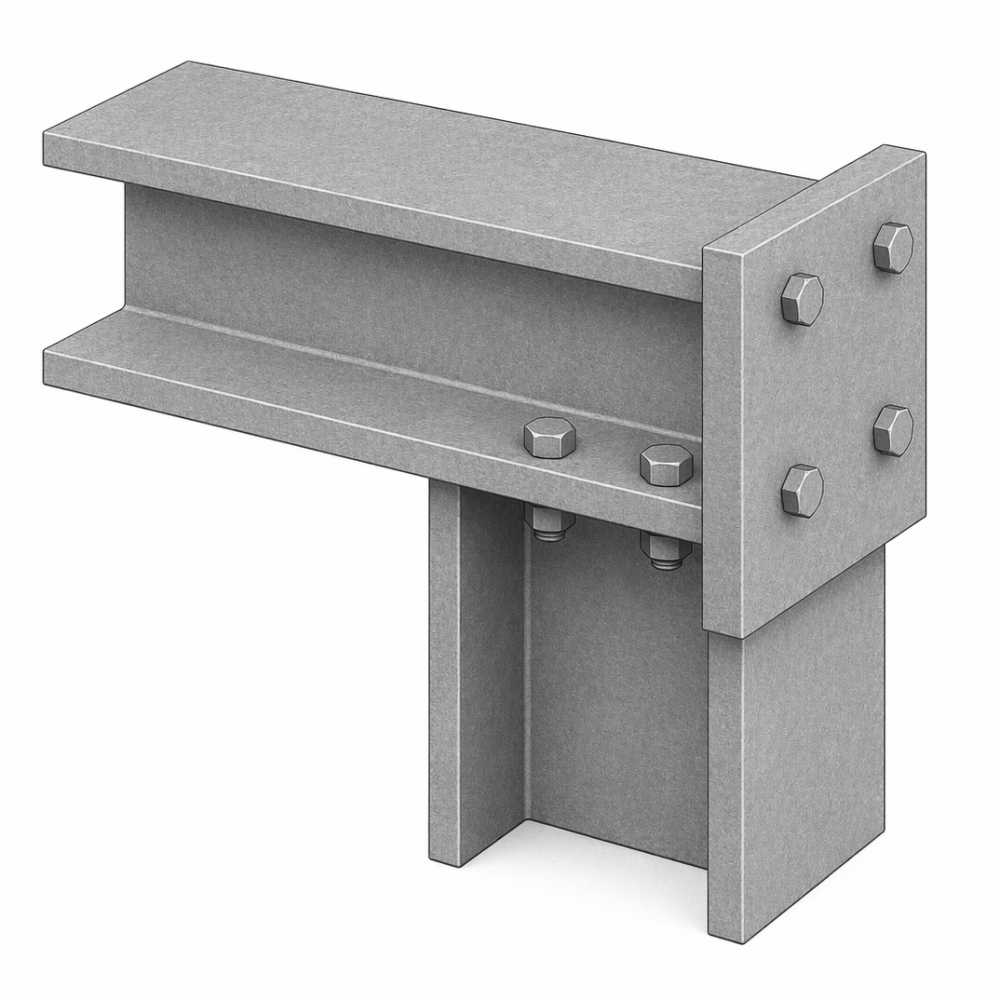
A moment connection is a rigid structural joint, most commonly formed between a beam and a column, designed to resist rotational forces and provide enhanced stability within a steel framework. Unlike simple connections, it is specifically engineered to transfer bending moments as well as shear forces, making it ideal for structures exposed to higher loads such as wind or lateral pressure.
This type of connection typically consists of two key components. An end plate is welded to the column, while a corresponding plate is attached to the beam—often extending slightly beyond the beam profile to allow for additional fixings. These plates are then securely fastened together using high-strength bolts, forming a robust and continuous connection between the two members.
Moment connections are widely used in structural steelwork where rigidity is essential, particularly in portal frames and buildings subject to significant external forces. When detailing or measuring for this connection, it is important to allow for an additional 30mm in the overall dimensions. This accounts for the thickness of the end plate along with the projection of the bolt heads, ensuring accurate fabrication and proper fit during installation.